Economists Again a Minimum Wage Raise
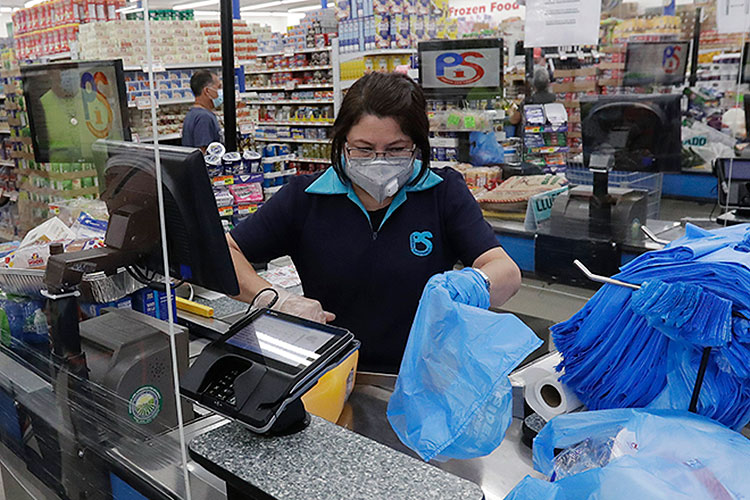
For millions of American workers in retail, restaurants, childcare and other sectors of the job marketplace, the minimum wage hasn't risen since 2009, when information technology was set at $7.25 an hour. Today, Berkeley scholars say, many workers accept full-fourth dimension jobs but still live in poverty. (AP photo by Wilfredo Lee)
Proposals for a $xv-an-60 minutes minimum wage suffered a major setback last calendar week in Congress, following months of contend and negotiation focused largely on a single core question: If the minimum wage is doubled over a five-year bridge, would that cause employers to reduce staff, or hire fewer people?
The conventional wisdom says yes — and if you want to aid workers, you don't want to cut jobs. In that location's just one problem: A growing body of prove suggests that the conventional wisdom is wrong.
All-encompassing research led by UC Berkeley economists and alumni has found that significant increases in the minimum wage take picayune, if any, impact on employers' hiring decisions. In fact, the researchers say, a higher minimum wage can produce benefits not just for workers, but for their employers, their communities and the entire economy.
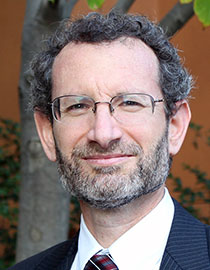
Ken Jacobs (Photo past Elizabeth del Rocío Camacho)
"Raising the minimum wage is a simple, direct way that we can improve the incomes of low-wage workers, pull many poor families out of poverty and pull many children out of poverty," said Ken Jacobs, chair of the UC Berkeley Labor Center. "It allows us to do it in a way that's good for the overall economic system — and it's incredibly popular among voters."
While a Democrat-backed button for the $xv minimum wage was stripped out of President Joe Biden'south celebrated $ane.nine trillion pandemic relief pecker, it'south certain to exist a continuing issue. Some scholars say the economic destruction acquired by the COVID-nineteen pandemic sharpens the urgency of finding a new way to enhance the minimum wage now gear up at $7.25-an-60 minutes for millions of American workers, and at merely $ii.13 an hr for others who rely on tips.

Saru Jayaraman (UC Berkeley photo)
If millions of workers in restaurants, child care or retail sales are stuck at or near the current minimum wage, "there will be no way for them to recover," said Saru Jayaraman, director of UC Berkeley's Nutrient Labor Research Heart. "There will exist no way they can pay all the back rent and bills that have accumulated during the pandemic.
"And if these workers tin can't buy things because they don't have money, there will exist no way for the economic system to bounce dorsum."
Over the past 2 decades, UC Berkeley has emerged as a centre of international influence in minimum wage research, and in contempo studies and interviews, academy economists described how a higher minimum wage can generate a range of benefits, many of them unexpected:
- A more robust economy and increased economical development in low-wage areas.
- A reduced pay gap between workers of color and their white colleagues.
- Reduced criminal offence, improved health in children and even reduced suicide rates.
- Lower government spending for prophylactic-net programs such as nutrient stamps and Medicaid, and billions in new tax revenues.
Such benefits are usually absent from loftier-level policy debates. But they could be crucially important as contend on the minimum wage continues in the weeks and months alee.
Business concern realities collide with erstwhile-school economics
American soapbox about the minimum wage is often a moral fence. A "pull-yourself-up-by-the-bootstraps" ethos competes with a view of workers as vulnerable to exploitation. The debate is colored by the assumption that minimum-wage jobs are largely geared to teenagers and higher students, providing them entry into the labor force while teaching lessons needed for a successful working life.
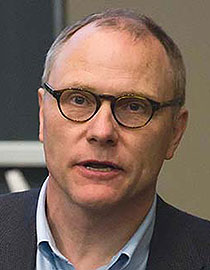
David Carte du jour (UC Berkeley photograph)
The conventional wisdom near the minimum wage and job losses met one of its first noun challenges in the early 1990s from 2 young economists at Princeton Academy: Alan Krueger and David Card, who now chairs the economics department at Berkeley. They were part of an emerging move that stressed the importance of using loftier-quality empirical bear witness to back economic theory.
As New Jersey prepared to raise its minimum wage most 20%, to $v.05 per 60 minutes, they saw an opportunity for innovative enquiry: They would track what happened to the labor force at the state's fast-food restaurants and compare that to restaurants in neighboring Pennsylvania, where the minimum wage would remain at $4.25 an hour.
If the conventional wisdom were correct, the restaurants in New Bailiwick of jersey should accept shed jobs. What the researchers found, notwithstanding, was birthday dissimilar. Fast-food restaurants suffered from chronic turnover and vacancies, and when wages increased, more people were willing to take the jobs. Employment didn't fall — and in some cases, it rose.
The report by Bill of fare and Krueger — "Minimum Wages and Employment: A Case Study of the Fast-Food Industry in New Jersey and Pennsylvania" — was published in 1993, and it sent stupor waves through the realm of labor and business economic science. The backlash drew in some of the biggest names in the field, with criticism that was unusually trigger-happy.
Their conclusion rocked the economics profession: "We find no indication that the rise in the minimum wage reduced employment."https://t.co/B7P45sv1ae
— Binyamin Appelbaum (@BCAppelbaum) March 18, 2019
The tardily Nobel laureate James Buchanan, for example, wrote in the Wall Street Journal that Card and Krueger were dissentious the fundamental credibility of economics. He called them "a bevy of camp-following whores."
Equally the years have passed, however, a new generation of economists have affirmed and expanded on the work of Krueger and Card, and even former critics accept come to accept their insights.
Nevertheless, Bill of fare and other say, today'southward debate remains rooted in conventional wisdom of the mid-20th century. Opinions based on the one-time conventional wisdom die hard, he said.
"The textbooks are frustratingly stupid in our field," Carte said in a recent interview. "The simple models that economists utilize — they desire to hold onto these models, even though they know full well that at that place are problems with them."
The working poor: Hard labor, constant vulnerability

(Graphic by Hulda Nelson)
With the policy fence gridlocked, and the minimum wage frozen at $7.25 for nearly 12 years, real-life economical conditions for tens of millions of low-wage workers have deteriorated.
"People who are living not simply paycheck to paycheck, only having problem making ends meet, are leading extraordinarily difficult lives," said Michael Reich, a Berkeley economist and co-chair of the Center on Wage and Employment Dynamics (CWED). "Any petty not-routine event — your car breaks down, or your kids are sick and tin't go to childcare — can trigger a cascade of events that could lead you to lose your chore. These are households with very little cushion, and minimum wage really does make a huge divergence."
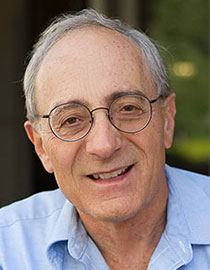
Michael Reich (UC Berkeley photo)
In 1968, the minimum wage was $one.60 an hour, most $12 in today's dollars. That means that workers today who are at or almost the $seven.25 minimum have far less ownership power than their counterparts more than than fifty years agone. Based on the average of near 31 hours per calendar week for low-wage workers, a minimum wage worker today would earn less than $12,000 per year.
A 2022 paper past Reich and Berkeley colleague Jesse Rothstein, former chief economist in the U.S. Department of Labor under President Barack Obama, described it as a poverty wage:
"This amount falls brusk of the poverty line for unmarried individuals and for unmarried parents," they wrote. "Single parents and their children would still be in poverty, even if the adult worked 40 hours per week and 52 weeks per year."
One contempo study institute that near 40 million Americans — 28% of the workforce — earn less than $15 an hour. Most are adults, and a disproportionate number are Black and Latinx workers. A $15-an-hour minimum wage would give full-time workers a minimum annual salary of well-nigh $31,000.
Down and out in American restaurants
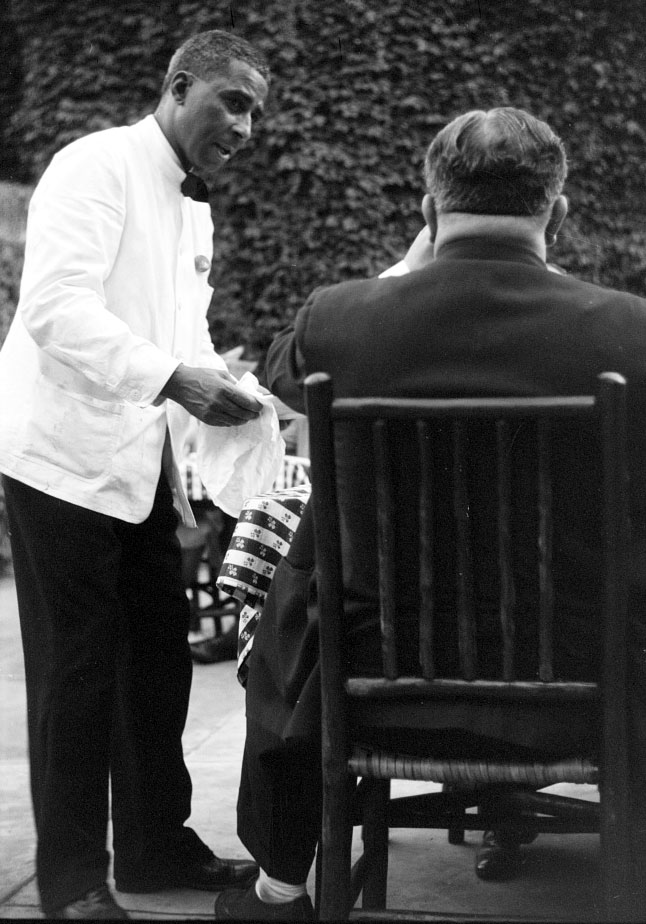
Today's depression minimum wages for waiters are direct linked to the post-Civil War era, when eatery owners hired former slaves with no wage at all, just only the opportunity to earn tips. Non until 1966 did federal law require restaurants and bars to pay a minimum wage. (U.Southward. Subcontract Security Administration/Part of War Information photo by Jack Delano via Picryl)
Jayaraman is an authorisation on restaurant labor and economics. In addition to her academic posts at Berkeley, she is the co-founder and president of I Off-white Wage, a grassroots advancement organization of restaurant workers. Restaurants feature the largest concentration of minimum and low-wage workers, she said, and these workers provide a startling view into the lives of the working poor.
Jayaraman traces the custom that allows eating house owners to pay their servers little or nothing, and forces the workers to be dependent on tips, to the mid-19th century, when women and ex-slaves were entering the restaurant workforce.
"It's a direct legacy of slavery that was used to cheapen Black lives and women's work," she said.
Today, U.S. law sets the minimum wage for waiters and other tipped workers at a mere $2.13 an hour — a rate unchanged since 1991. If waiters' tips aren't enough to bring them up to minimum wage, restaurants are required to brand upwardly the difference, just federal enforcement is weak and the law is often ignored.
Who is virtually harmed past this law? In testimony before the Illinois Senate last November, Jayaraman had a clear answer: women, and especially women of color.
Some 70% of tipped workers in Illinois are women who typically work at casual restaurants like IHOP and Denny's, she told the lawmakers, and they "struggle with the highest rates of economic insecurity… of any industry."
"In Chicago," she added, "one-third of Black women tipped workers alive in poverty, half depend on nutrient stamps, and 45% rely on Medicaid — all 3 to five times the rate of the general workforce."
Co-ordinate to a One Fair Wage report issued late last year, the pandemic has had a staggering effect: Of all the jobs lost in the U.S., an estimated one in four were nutrient service jobs. Those who kept their jobs often have faced a grim struggle with reduced wages and an elevated risk of getting sick.

Women make up almost 70% of U.S. restaurant servers, and Jayaraman said many are under pressure to dress provocatively in order to win bigger tips. Increasingly, she said, customers harass them threatening to withhold tips unless they remove their masks. (Photo by Nathan Rupert via Flickr)
A startling iv in x women restaurant workers reported an increment in sexual harassment past customers. The workers reported degrading treatment: "Pull that mask down and so I can see if I desire to take you home later," one client said. "I'll have your mask off and stick my tongue downwardly your throat," said some other.
Because an hourly wage of $2.13 barely covers taxes, "you're living almost completely just on tips," Jayaraman said. "You accept to tolerate any a client does to you — however they treat you, bear on you or talk to you — because they know they're the ones paying your family's bills. They're feeding your children.
"It's not the employers — they turn a profit off the value of your labor, just they practice not pay y'all. That'southward the literal definition of slavery."
California, forth with 6 other states and the District of Columbia, has enacted laws to clinch that tipped workers volition be paid the land's full minimum wage, earlier tips. Co-ordinate to Jayaraman, reports of sexual harassment in California are half of those in states with the $2.xiii minimum wage.
Still, hundreds of thousands of California's food service workers remain in the ranks of the working poor.
Jacobs' research team recently co-authored a report on 150,000 fast food workers in Los Angeles County, nigh of them at or almost the minimum wage. The researchers plant that two-thirds of the workers were in families receiving federal safety-net support for income, food supplies or medical intendance.
$15 an hr: Many winners — but how many losers?
In late February, Republican senators opposed to a $fifteen minimum wage proposed a middle path, raising the minimum to $ten by 2025. The Congressional Budget Office (CBO) had gamed out that pick in 2022 and institute it would accept a "negligible" impact on poverty.

U.S. fast-food workers often have low pay, piffling sick get out and few benefits. Tens of thousands in California solitary employ government welfare programs to get past, Berkeley researchers say. (Image via Wikimedia Commons)
In a dissever report earlier this twelvemonth, the CBO constitute that a $15 minimum would accept a dramatic touch on: higher wages for 17 million people now making less than that, and a possible bump for another 10 million currently just above $15. That would bring 900,000 people out of poverty, the CBO said — and i.4 meg jobs would exist lost.
But Berkeley economists and colleagues nationwide accept criticized the CBO methodology, saying that it vastly overstated the potential job losses.
Why wouldn't the task losses exist greater? Why, in other words, does the conventional wisdom autumn brusk? Reich has explored various dimensions of the issue, and he cites several factors that would ease the striking on business concern.
Raising the wage gradually, over v years, would forbid a salary shock. The higher wages would assist to prevent turnover and better productivity, reducing costs for hiring and preparation. The raise would apply to every business — every eatery, for case, would have to manage the same labor costs every bit its competitors.
Labor costs would rise, Reich said, and businesses would laissez passer small price increases to their customers. Merely research shows that people will absorb those rising prices, particularly if they're spread out over five years.
At the same time, research conducted by Reich with Berkeley economists Sylvia Allegretto and Claire Montialoux shows that businesses would benefit every bit higher wages for workers generate college spending on products and services.
'Higher minimum wages are likely to save lives'
Decades of research take demonstrated that poor people often suffer poor health. It stands to reason, then, that ameliorate pay for low-income workers could improve their wellness.
But research past Berkeley scholars and other economists has probed deeper problems of how the poverty-level minimum wage is embedded in troubling and intractable American bug ranging from racial inequality to childhood poverty, and from the costs of government welfare programs to the costs of economical despair.
Among the key findings:
A higher minimum wage will narrow the income gap between workers of color and white colleagues.

Ellora Derenoncourt (Photo past Shruti Parekh)
In research published last month, Montialoux and her Berkeley colleague, economist Ellora Derenoncourt, found that federal action in the 1960s to heighten the minimum wage and extend it to new task sectors significantly narrowed the earnings gap betwixt Black and white workers.
"It is no coincidence that ceremonious rights leaders in 1963 singled out the minimum wage equally a critical tool for racial justice, and their demands are merely as salient today," Derenoncourt and Montialoux wrote in the New York Times.
In an interview, Derenoncourt said that over sixty% of nursing habitation workers in that before era were paid less than the newly set minimum wage — but the research institute no prove of meaning chore losses after it went into consequence.

Claire Montialoux (Photo by Brittany Hosea-Small)
"The 1967 expansion of the minimum wage affected xxx% of all Black workers and twenty% of workers overall," she said. "That is roughly the same every bit the $fifteen minimum wage today."
It would relieve poverty and advance development across low-income regions.
One of the nearly common criticisms of the proposed $15 hourly wage is that, while appropriate for expensive urban areas such equally San Francisco or New York, it would impose a heavy burden on businesses in less affluent areas where the price of living is far lower.
Simply extensive enquiry on the 1960s-era minimum wage expansion showed that it "helped to spur increases in growth and productivity" in the Southward and other low-wage areas, Jacobs said.
In a groundbreaking 2022 study, Reich and Anna Godøy, so a research economist at the Plant for Research on Labor and Employment (IRLE), establish that a $fifteen minimum wage in low-wage areas would lift workers and their children out of poverty without causing job loss, and without adverse effects on vulnerable women or minority workers.
While many states and cities have set their minimum wage above the federal rate, 21 states remain at $7.25, and 10 others are under $10. Economists say that raises a gamble: Some states could be trapped in a second-tier economy characterized past chronic low wages and high poverty. Jacobs and others stress that $15 an hour, or $31,000 a year, is non lavish anywhere.
"That's a level of pay that allows people to see bones needs throughout the U.s.," he said. "It fits with some people's basic values that workers should earn enough to survive and support their families, and that companies should non be immune to pay wages that are so low that people tin't meet their needs."

Though they have vitally of import jobs, U.S. child-care workers are frequently paid at or near the minimum wage, experts say. (Photo by Elizabeth del Rocío Camacho)
Many benefits of a college minimum wage would flow to children.
I contempo survey of research ended that nigh fifteen million children in low-income working families — 1.half dozen million of them in California — could do good from the raise. The higher wages are associated with improved prenatal development, better kid health, reduced reports of maltreatment and better results at school.
Only even at $xv an hour, Reich and Rothstein found, many families would remain locked in poverty. While a single adult could get by only about everywhere on that wage, they wrote in 2017, "single parents with children would fall brusk of the basic family budget in almost every U.S. county — fifty-fifty with the help of food stamps and other public support programs."
A college minimum wage would prevent suicides.
In 2019, Reich and Godøy co-authored an IRLE written report that found that 10% increases in the minimum wage could aid foreclose over 1,200 U.S. suicides a year.
"A lot of the time, the give-and-take of higher minimum wages is framed in narrow economic terms," Godøy said then. "Our report shows that higher minimum wages are likely to relieve lives."
Government would gain two ways: College tax revenue and reduced welfare expenses.
Nearly one-half of the U.Due south. families who would gain from a $xv minimum wage are currently using government aid programs such equally Medicaid or food stamps, according to research co-authored by Jacobs and released in January.
In a paper published concluding month, Reich elaborated on that finding: Higher income for depression-wage workers would hateful more than taxation revenues for the federal government and less demand for safety-net support, he found. Plus, some older workers would filibuster retirement, easing the demand for Social Security funds.
Taken together, Reich calculated, these new revenues and savings would yield $65.four billion per year to the federal regime.
And now, the search for a new political road

President Joe Biden and Congressional leaders are under intense pressure from labor and anti-poverty organizations to win blessing for the $fifteen-an-hour minimum wage. (Photo by Gage Skidmore via Wikimedia Commons)
While scholars at Berkeley have achieved national and international influence through their research findings, much of their work is merely incidental to the political fence in Washington — or absent altogether.
"The discussion on minimum wage in the United states of america has always been odd," Jacobs said. "Ordinarily in a public policy discussion, you lot're looking at what are the benefits, what are the trade-offs, how do they balance confronting each other?
"But," he added, "somehow in this fence, the opponents have put forward this very simplistic supply and need model of employment. It doesn't correspond to the evidence, but it overshadows all of the other furnishings of raising the minimum wage."
The proposed $fifteen minimum appears to have momentum: Amazon, Costco, Target and other retailers have embraced information technology, and voters in cherry-red country Florida canonical information technology in November. Though the higher minimum wage was stripped from Biden'southward COVID relief pecker, Berkeley scholars predict it will remain prominent as Washington faces continued force per unit area to reduce poverty and back up working-grade Americans.
"So many years accept passed since the minimum wage was raised, and millions of people take fallen further and further backside," Jayaraman said. "It's clear that when they're financially secure, the unabridged economy benefits. And there's potent public support for change. And so this is a moment of opportunity for lawmakers, and the issue will certainly remain a flashpoint until at that place's a fair resolution."
Source: https://news.berkeley.edu/2021/03/18/a-15-minimum-wage-would-cost-jobs-right-probably-not-economists-say/
0 Response to "Economists Again a Minimum Wage Raise"
Enregistrer un commentaire